
SW Ontario Housing Market 2026
Ontario Housing Market 2026
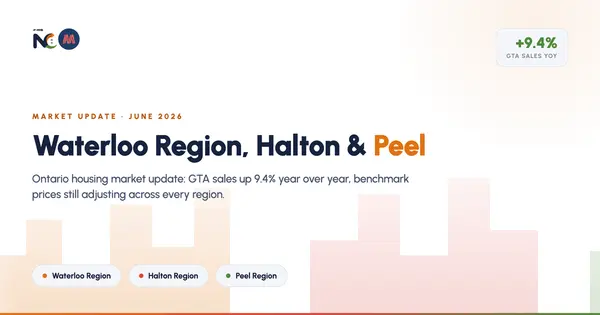
What January MLS Data Is Actually Showing. Waterloo • Peel • Halton • Guelph
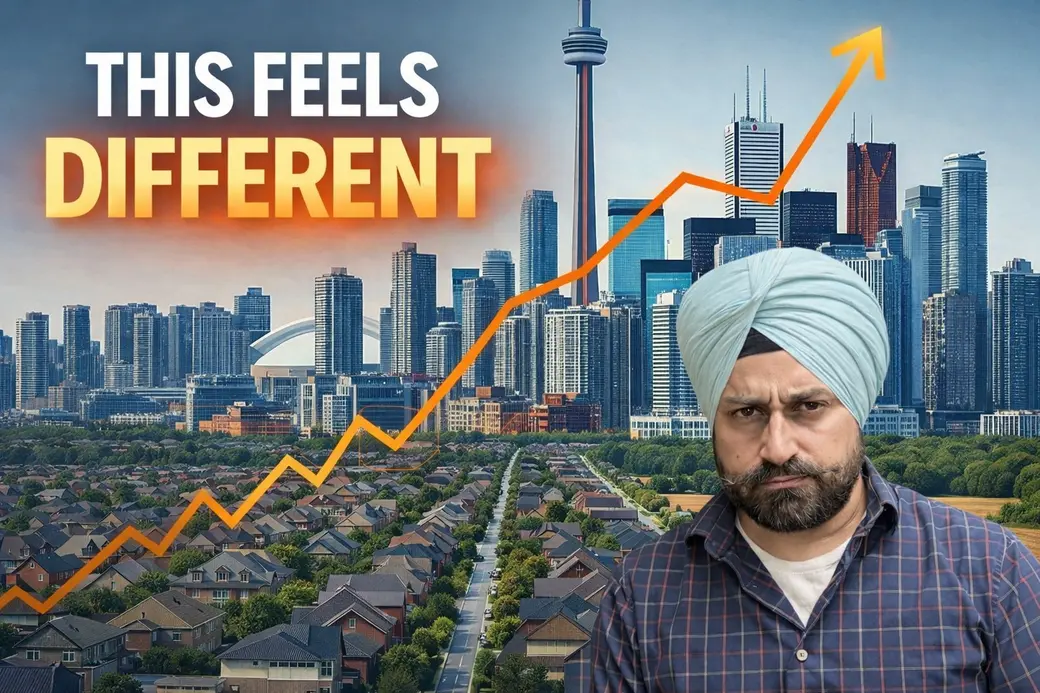
People are searching Ontario housing market 2026 because something feels different. And January MLS data confirms that instinct.
This is not a crash. It's not a boom. And it's definitely not the market we saw between 2020 and 2022. What we're in now is a thinking market. One driven by inventory, affordability, and employment stability.
Interest rates have stabilized. Prices are uneven. Inventory is rising. The variable most people are underestimating is jobs.
The Bigger Picture. Why 2026 Feels Different
On January 28, 2026, the Bank of Canada held its policy rate at 2.25%. Borrowing costs stopped moving. That alone changed buyer behaviour.
But stability doesn't equal confidence. Confidence now comes from employment.
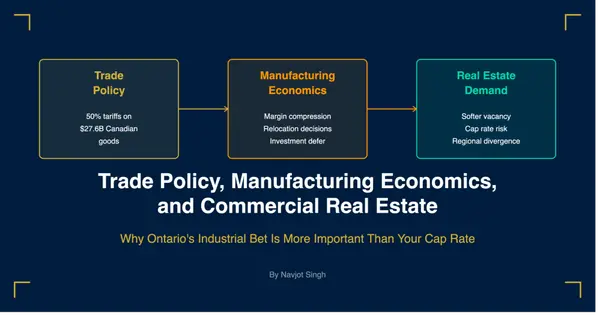
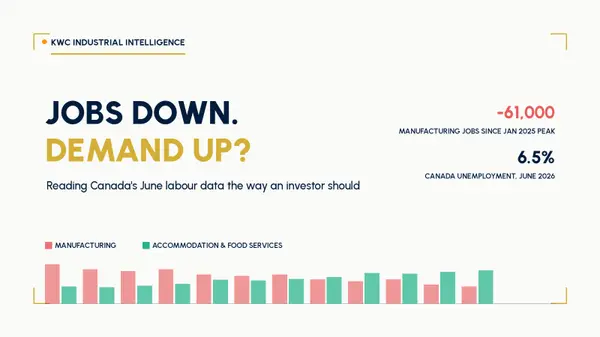
- Manufacturing layoffs and tariff pressure
- Uncertainty around trade policy and auto jobs
- Mortgage renewals at materially higher rates
Recent developments creating employment uncertainty:
- GM Oshawa Plant: 500 workers laid off on February 2nd
- Bombardier: Facing 50% tariff threats announced January 29th
- CUSMA Renewal: Trade uncertainty impacting Ontario's auto and manufacturing sectors
- Chinese EVs: Entering Canada at lower tariffs, potentially triggering broader U.S. tariffs on the auto sector
Buyers aren't scared. They're cautious. That distinction matters.
Waterloo Region. Selective, Not Weak
January 2026 numbers tell a story most people are missing.
• Homes Sold: 260 (down from 308 in December)
• New Listings: 745
• Active Listings: 1,376 (down from 1,465 in December)
• Months of Inventory: ~5 months (balanced territory)
• Median Price: $662,500 (down from $670,000)
• Average Price: $729,720 (UP from $717,706)
When the median drops but the average rises, you're looking at a bifurcated market.
Some neighbourhoods are still selling over asking in under two weeks. Others are sitting for months and closing below expectations.
What's Working:
- Smaller, well-presented freehold homes under $700,000 remain the most liquid
- Aggressive pricing on larger homes over $1M can still generate multiple offers
- Buyers are disciplined — they won't overpay, even in multiples
What's Struggling:
- Condos are the weakest segment in Waterloo
- Rising condo fees and weaker buyer preference are creating real pressure
Bottom line: Waterloo isn't weak — it's selective. Price it right, present it professionally, and it moves. Overprice it? You'll sit on the market.
Peel Region. Brampton Is Not Mississauga
Peel is no longer one market. January listings surged, but motivation looks different by city.
• Homes Sold: 551 (down from 631 in December)
• New Listings: 2,123 (nearly DOUBLED from 1,174 last month)
• Median Price: $840,000
• Average Price: $921,218
Let that sink in. New listings almost doubled month over month.
Brampton vs Mississauga: Two Different Markets
Mississauga:
- 268 sales
- Average price: $924,617
- Perceived as more stable and lifestyle-driven
- Less regulatory pressure
Brampton:
- 242 sales
- Average price: $884,097
- Seller motivation driven by multiple factors
In Brampton, regulatory pressure, rental enforcement, and carrying costs are pushing more sellers to market:
- Rental licensing enforcement getting stricter
- Crackdowns on illegal basement apartments
- Rising property taxes squeezing margins
- Crime perception affecting buyer psychology (fair or not)
Peel is transitioning from an investor-led market to an end-user market. That changes pricing, negotiation, and absorption.
The Investor Shift in Peel
Small residential investors are stepping back. Their capital is moving toward:
- Multifamily buildings
- Commercial plazas
- Larger-scale investments
What's Moving:
- Freehold homes under $1M — especially in Brampton — are still selling
- Condos are struggling due to rising fees, lower rents, and investor pullback
Halton Region. Early in the Adjustment Cycle
Halton saw one of the sharpest listing increases month-over-month. At the same time, average prices held firm due to higher-end homes transacting.
• Homes Sold: 302 (down from 383 in December)
• New Listings: 1,152 (MORE THAN DOUBLED from 454)
• Average Price: $1,130,223 (UP from $1,121,039)
Wait — how did prices rise when listings doubled?
Composition effect. Higher-value properties are the ones selling, pulling the average up. This isn't strength. It's a mix shift.
Halton Market Breakdown
Oakville:
- 96 sales
- Average: $1,306,495
- Key opportunity: First time in years you can access freehold options near $1M
Burlington:
- 102 sales
- Average: $1,032,816
- Benefiting from Oakville spillover
- Move-up buyers active
Milton:
- 77 sales
- Average: $1,065,773
Halton Hills:
- 27 sales
- Average: $1,055,259
The Inventory Split
- Freehold months of inventory: ~6 months (balanced)
- Condo months of inventory: ~13 months (clear buyer's market)
Three Drivers of Halton's Inventory Surge
One: Mortgage Renewals. Homeowners who bought in 2021-2022 at 1.5% are renewing at 5%. Payment shock is real.
Two: Pre-Construction Condo Investors. Taking possession and immediately listing to avoid negative cash flow.
Three: Builder Inventory. Much of it off MLS, adding hidden pressure to the market.
Guelph. Location Beats Property Type
Guelph continues to prove a core truth of real estate. Micro-markets matter more than headlines.
• Homes Sold: 75 (basically flat from 78 in December)
• New Listings: 273 (up from 121)
• Average Price: $743,380 (down from $822,432)
The average price drop is mix-driven — fewer high-end homes sold this month.
Months of Inventory by Property Type
- Houses: 6 months of inventory | Average: $846,487
- Condos: 9 months of inventory | Average: $468,500
- Townhouses: 11 months of inventory | Average: $548,400
What's Working in Guelph:
- The $600K to $800K range — strong buyer activity
- End-users dominate most neighbourhoods
- Lifestyle areas near Costco — still seeing multiple offers and over-asking when well presented
What's Struggling:
- Student-rental corridors
- Condos and townhouses (unless near universities)
A well-located townhouse near University of Guelph outperforms a poorly-located detached home every time. Investor activity is highly concentrated near University of Guelph and Conestoga College.
Guelph isn't one market — it's several neighbourhood markets.
What This Means Going Forward
If employment holds, Ontario moves through a slow, balanced market. If job pressure increases, buyer hesitation grows. Not panic. Discipline.
This market is no longer driven by cheap money or speculation. It's driven by:
- Job stability
- Carrying costs
- Real affordability
This Is a Thinking Market
For sellers who cannot hold for several years, strategy matters more than timing. Pricing, presentation, and positioning decide outcomes.
For buyers, this is the most rational environment Ontario has seen in years. Negotiation is back. Conditions are back. Leverage exists.
This market doesn't reward hope or fear. It rewards preparation.
If you want neighbourhood-level insight, not headlines, start with the data.
About Navjot Singh
Navjot Singh is a real estate expert specializing in Ontario's housing markets. With deep local market knowledge across Waterloo Region, Peel, Halton, and Guelph, Navjot provides data-driven, cautiously directional market analysis that cuts through the noise and helps clients make informed real estate decisions.
📍 Visit: navjotchahal.ca
📺 Watch: Monthly Ontario housing market updates on YouTube
💬 Subscribe for market insights and neighbourhood analysis
This analysis is based on January 2026 MLS data and on-the-ground market observations. Real estate markets are dynamic and localized. Always consult with a qualified real estate professional before making property decisions.
Recent Posts